

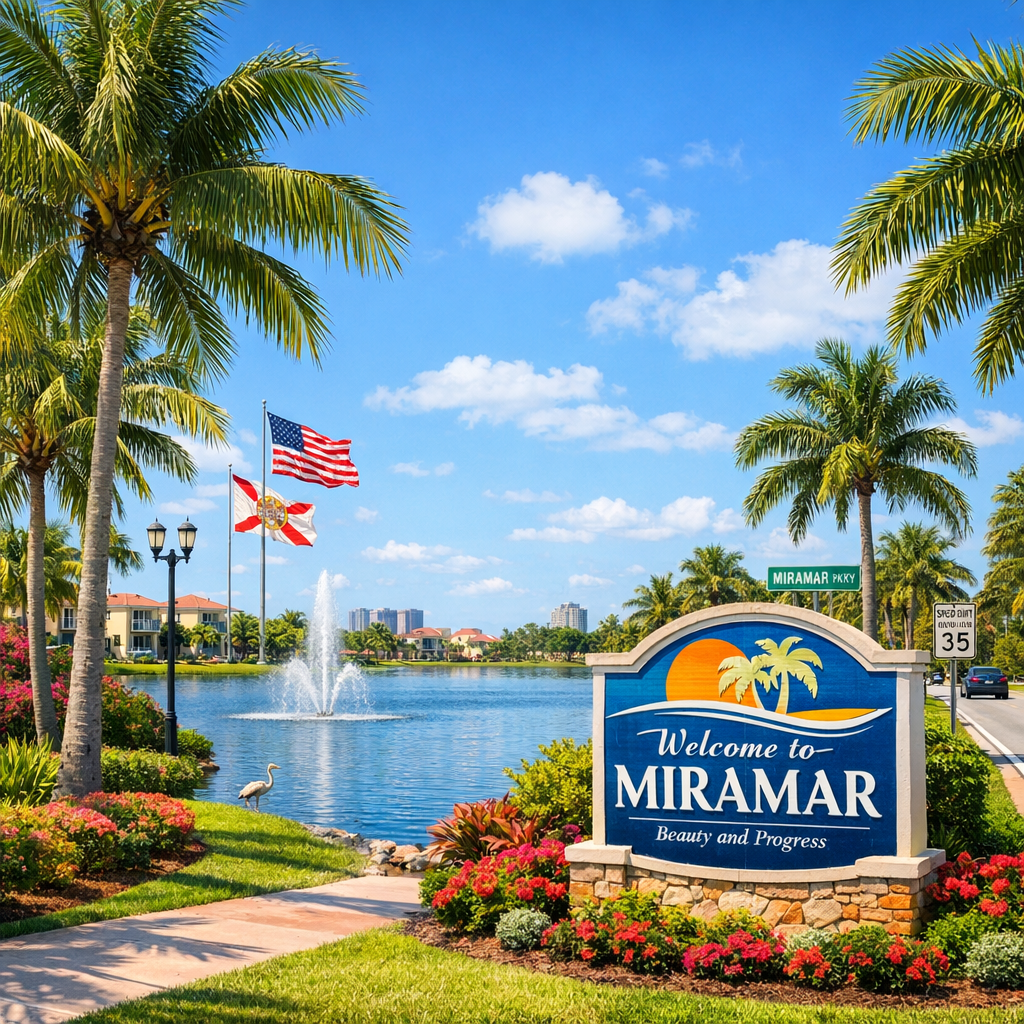
Miramar, Florida, is characterized by a tropical monsoon climate, offering residents warm temperatures and distinct wet and dry seasons. Understanding these patterns is essential for both daily life and long-term planning.
Temperature Trends
Throughout the year, Miramar experiences relatively stable temperatures. Average highs range from approximately 73.4°F (23°C) in January to about 89.1°F (31.7°C) in August. Similarly, average lows vary from around 63.1°F (17.3°C) in January to 81.9°F (27.7°C) in August. This consistency provides a comfortable environment for residents and visitors alike.
Rainfall and Seasons
The city has a pronounced wet season from May through August, with monthly rainfall reaching up to 0.94 inches (24mm). Conversely, the drier months span from November to March, offering more favorable conditions for outdoor activities. This seasonal variation is typical of the tropical monsoon climate, influencing local agriculture and water management practices.
Environmental Considerations
Miramar’s coastal location makes it susceptible to climate change impacts, including increased risks of heat and flooding. Projections indicate a rise in the number of extremely hot days and potential for more intense storms. Residents are encouraged to stay informed about these risks and participate in local sustainability initiatives to mitigate environmental challenges.
By understanding Miramar’s climate and environmental dynamics, residents can make informed decisions to enhance their quality of life and contribute to the community’s resilience.