

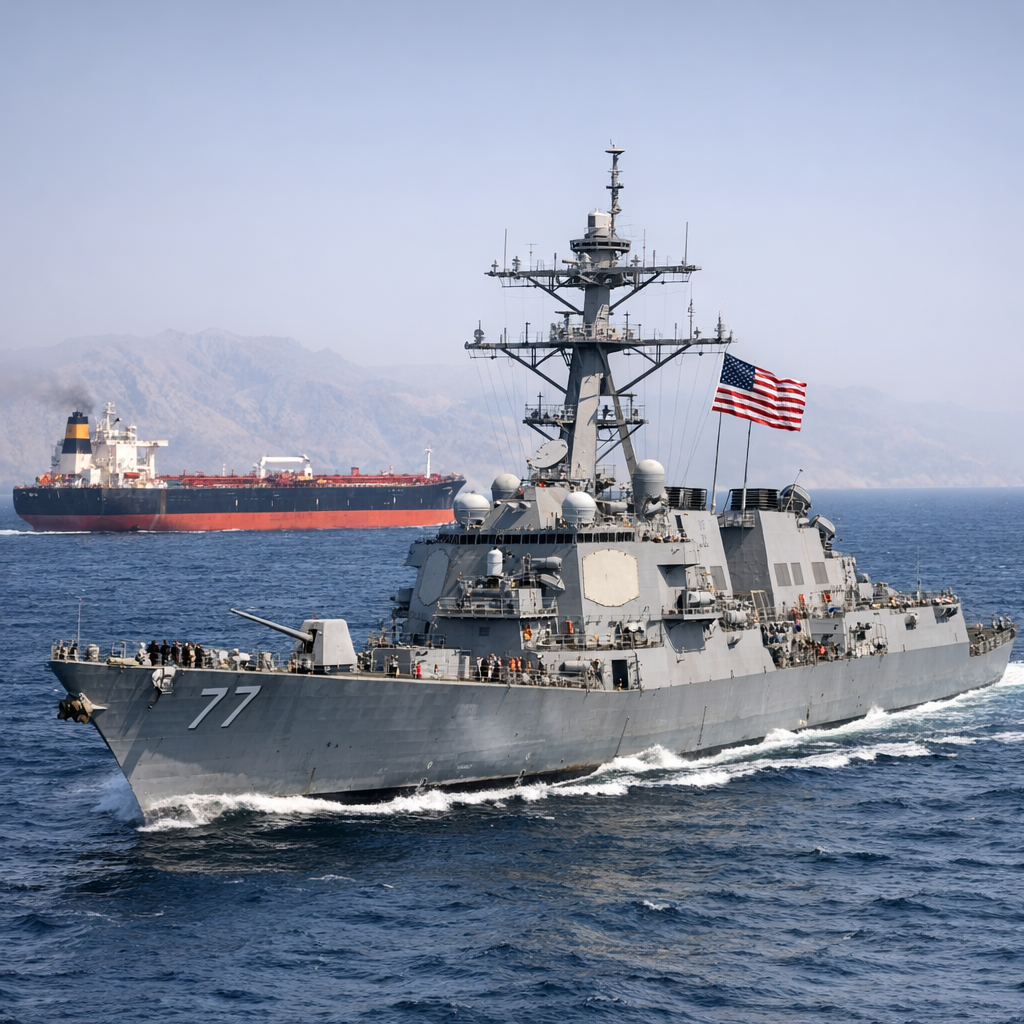
The Strait of Hormuz, a vital waterway connecting the Persian Gulf to the Arabian Sea, has recently become a focal point of escalating tensions between the United States and Iran. This strategic passage is crucial for global oil transportation, with a significant portion of the world’s petroleum passing through its narrow confines.
Recent Developments
In early May 2026, reports emerged of renewed hostilities in the Strait of Hormuz. The United States launched “Project Freedom,” an operation aimed at ensuring the safe passage of commercial vessels through the strait. This initiative involved deploying guided-missile destroyers, over 100 aircraft, and approximately 15,000 service members. The operation was a response to incidents where civilian ships under U.S. military protection were targeted by cruise missiles, drones, and small boats, leading to the sinking of six attacking vessels by U.S. helicopters.
Implications for Global Oil Markets
The Strait of Hormuz is a critical chokepoint for the global oil supply. Any disruption in this region can lead to significant fluctuations in oil prices worldwide. The recent clashes have raised concerns about the stability of oil shipments, potentially affecting economies that rely heavily on petroleum imports.
Local Impact
For residents of Miramar, Florida, and the broader United States, these international developments may translate into higher fuel prices at the pump. The uncertainty surrounding the security of oil transit routes often leads to speculative trading, which can drive up costs for consumers.
Looking Ahead
While diplomatic efforts are ongoing to de-escalate the situation, the underlying tensions between the U.S. and Iran remain a concern. Monitoring these developments is essential, as they have far-reaching implications not only for international relations but also for domestic economic conditions.